
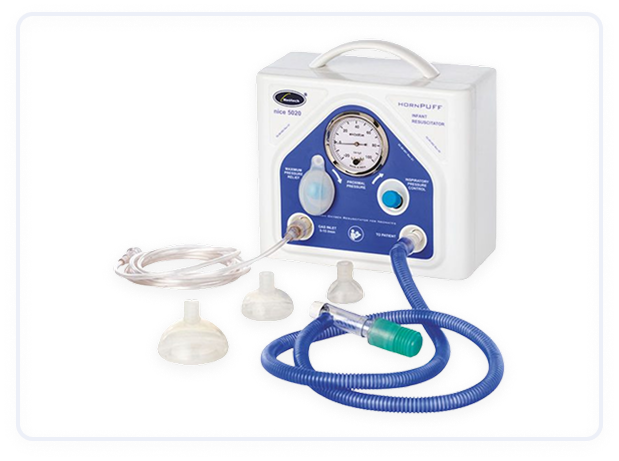
T-Piece Resuscitator
A T-Piece Resuscitator (TPR) is a crucial device used in Neonatal Intensive Care Units (NICUs) for resuscitation and respiratory support of newborns, particularly in cases of respiratory distress or failure to initiate spontaneous breathing at birth. The T-Piece Resuscitator provides positive pressure ventilation (PPV) to help establish proper lung function in newborns who are unable to breathe on their own or are suffering from conditions that impair their ability to maintain adequate oxygenation.
Key Features of T-Piece Resuscitator
Positive Pressure Ventilation (PPV):
The T-Piece Resuscitator is designed to deliver controlled, positive pressure breaths to the infant’s lungs. This is critical in cases where the infant's respiratory effort is insufficient or absent, such as in neonatal resuscitation or respiratory failure.
It is used to help inflate the lungs and establish effective oxygenation and ventilation until spontaneous breathing is restored or further respiratory support is provided.
Adjustable Pressure Settings:
The device allows clinicians to adjust the level of pressure delivered to the infant’s airways. It typically includes settings for:
Peak Inspiratory Pressure (PIP): The maximum pressure delivered during the ventilation.
Positive End-Expiratory Pressure (PEEP): This ensures that the infant's airways stay open after exhalation and prevents alveolar collapse, aiding in lung recruitment.
This adjustability is important for tailoring the ventilation to the specific needs of the neonate, especially for preterm or compromised infants.
Oxygen Delivery:
The T-Piece Resuscitator is often connected to an oxygen source (either through a wall outlet or an oxygen cylinder) to ensure the infant receives appropriate levels of oxygen during ventilation. This is particularly vital for neonates suffering from hypoxemia (low oxygen levels in the blood) or conditions like respiratory distress syndrome (RDS).
Manual and Controlled Ventilation:
The device operates manually, with the clinician using a self-expanding bag or squeeze bag to provide breaths to the infant. The manual operation allows for real-time control, which is critical in emergencies, ensuring precise and responsive ventilation to the infant.
T-Piece Resuscitators can be used for both intermittent positive pressure ventilation (IPPV) and continuous positive airway pressure (CPAP), depending on the infant's condition.
Visual Monitoring:
Some modern T-Piece Resuscitators have built-in features for visual monitoring, such as indicators for pressure levels, tidal volume (the amount of air delivered with each breath), and airway pressure, helping clinicians monitor the effectiveness of ventilation and adjust settings as necessary.
Various industries
Request More Information
Contact Us to learn more about our offerings or Request a Quote to get started today!
Contact Us

