
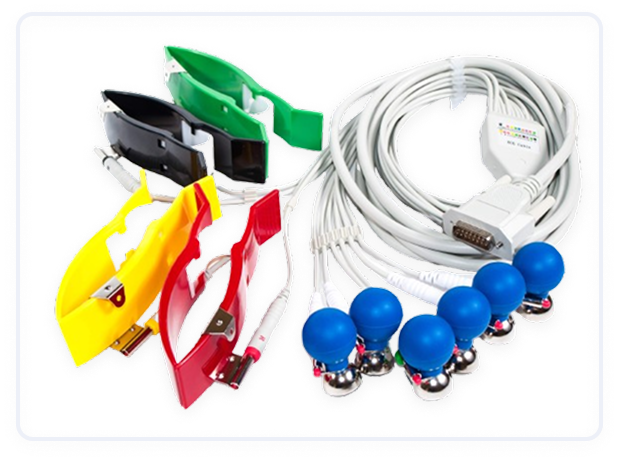
Ecg Cable, Bulb, Clamp & Paper
An ECG system includes essential components like ECG cables, which transmit electrical signals from the heart to the machine for analysis. The ECG bulbs help create a secure connection between the electrodes and the skin, ensuring accurate signal capture. ECG clamps are used to hold the electrodes firmly in place during the procedure, preventing slippage. The ECG paper records the heart’s electrical activity in the form of a graph, allowing healthcare professionals to assess the rhythm and function of the heart. These components work together to ensure precise and reliable heart monitoring. By maintaining secure connections and clear signal transmission, the system aids in diagnosing and managing various cardiac conditions. Ultimately, they play a critical role in providing accurate, real-time heart assessments for patients.
ECG Cable
Purpose : The ECG cable connects the electrocardiogram machine to the electrodes placed on the patient's body, transmitting the electrical signals from the heart to the machine for recording.
Key Features
Multi-lead configuration : ECG cables typically come with multiple leads (often 3, 5, or 12 leads), each connecting to a different electrode placed on specific parts of the patient's body (arms, legs, chest).
Durability : Made from high-quality, durable materials to withstand the rigors of repeated use and ensure consistent signal transmission.
Flexibility : Cables are flexible and long enough to allow easy patient positioning without constricting movement.
Color-coded leads : To help healthcare professionals easily identify which electrode corresponds to which lead.
Electrode connections : At the ends, they feature connectors that attach securely to the electrodes.
ECG Bulb
Purpose : The ECG bulb is a part of the electrode used in some traditional ECG systems. It helps to apply a slight suction to the skin, creating a seal for better electrode contact.
Key Features
Suction-based design : The bulb creates a vacuum effect that ensures better adhesion of the electrode to the skin.
Comfortable fit : Designed to be comfortable for the patient while maintaining a secure connection for accurate readings.
Reusable or disposable : Depending on the type of bulb, it may be either reusable (with proper cleaning) or disposable.
ECG Clamp
Purpose : The ECG clamp is used to secure the electrodes to the patient’s body (particularly for limb electrodes in a 12-lead ECG) or to maintain a firm connection between the cables and electrodes.
Key Features
Firm grip : The clamp secures the electrode in place, preventing slippage during the test.
Easy application : Designed for quick and efficient attachment to the patient, ensuring a stable signal.
Material : Made of plastic or stainless steel, offering a sturdy yet lightweight design.
Patient comfort : Some clamps are designed with padding or smooth edges to ensure they don't cause discomfort to the patient.
ECG Paper
Purpose : ECG paper is the medium on which the electrical activity of the heart is printed out in the form of a graph (an ECG strip). It provides a visual representation of the heart's rhythm, electrical intervals, and waveform patterns.
Key Features
Grid design : ECG paper has a printed grid pattern with small squares, allowing for precise measurement of time and amplitude. Each small square typically represents 1mm in both time and amplitude (with one small square representing 0.04 seconds).
Speed of recording : The most common recording speed for ECG paper is 25mm per second, but some systems use 50mm per second for high-resolution records.
High-quality, non-smudge paper : The paper must be of high quality to ensure clear, legible recordings that won’t fade or smudge over time.
Consistency : It is designed to consistently hold the ink or printed data for long periods, ensuring reliable readings.
Request More Information
Contact Us to learn more about our offerings or Request a Quote to get started today!
Contact Us

