
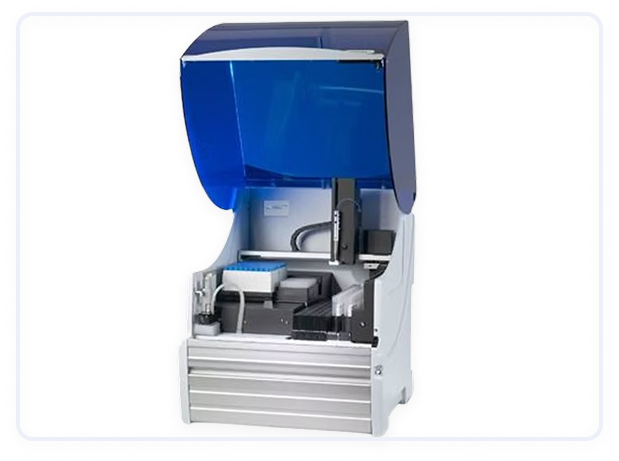
ELISA Processor
An ELISA Processor is an automated laboratory instrument designed to perform Enzyme-Linked Immunosorbent Assay (ELISA) tests. ELISA is a widely used biochemical technique to detect and quantify substances such as proteins, hormones, antibodies, and antigens. The ELISA processor automates the steps of this complex immunoassay, significantly improving throughput, accuracy, and reproducibility in laboratories. It is an essential tool in clinical diagnostics, research, food safety testing, and pharmaceutical industries.
Key Features of an ELISA Processor
Automation of ELISA Steps : The ELISA processor automates key steps of the ELISA process, including sample addition, reagent addition, washing, incubation, and detection. This automation helps reduce human error, save time, and increase the efficiency of high-throughput testing.
High Throughput : ELISA processors are capable of handling a large number of samples simultaneously, making them ideal for laboratories that need to process multiple tests quickly. High-throughput capabilities are especially important in clinical settings where multiple patient samples need to be analyzed.
Accuracy and Reproducibility : Automated systems provide consistent, reliable results by following standardized protocols. This ensures that each sample undergoes the same procedure, minimizing variations and improving reproducibility in results.
Versatile Detection : ELISA processors can support different detection methods, including colorimetric, chemiluminescent, or fluorescent detection, depending on the type of ELISA test being performed. This versatility allows for various assays to be run on the same machine.
Precise Liquid Handling : The processor includes accurate liquid handling systems to dispense precise volumes of samples, reagents, and washing buffers, ensuring optimal reaction conditions for ELISA assays.
Integrated Data Analysis : Many ELISA processors come with built-in software that automatically processes and analyzes the results. The software can calculate concentrations, generate reports, and provide data interpretation, streamlining the workflow and reducing the need for manual calculations.
Customization and Flexibility : ELISA processors are often customizable to fit the specific needs of a laboratory. Users can select protocols, adjust incubation times, or choose detection methods to suit various ELISA formats (e.g., direct, indirect, sandwich, or competitive ELISA).
Reduced Hands-On Time : With automation, the processor reduces the amount of manual labor involved in the ELISA process, allowing laboratory personnel to focus on other tasks and improving overall efficiency.
Error Reduction : By automating repetitive tasks such as washing and reagent additions, ELISA processors reduce the chances of human error, leading to more accurate and reliable results.
Various industries
Request More Information
Contact Us to learn more about our offerings or Request a Quote to get started today!
Contact Us

