
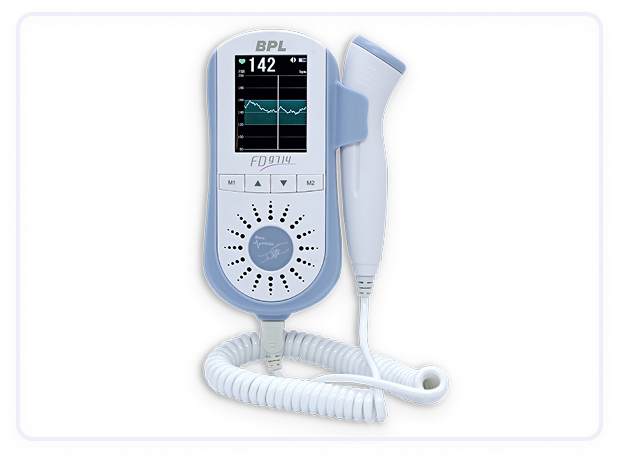
Fetal Monitor
A fetal monitor is a medical device used to track the well-being of a fetus during pregnancy and labor by monitoring fetal heart rate (FHR), uterine contractions, and sometimes other parameters like oxygen levels or fetal movement. These monitors are essential tools in obstetric care and are primarily used in maternity wards, labor and delivery units, and during prenatal visits to ensure the health of both the fetus and the mother.
Key Features of Fetal Monitor
Real-Time Monitoring : The ability to monitor the fetal heart rate and uterine contractions in real-time allows doctors and nurses to assess the fetal status continuously and make decisions quickly.
Graphical Display : Fetal monitors often have a graphical display (cardiotocograph or CTG) to represent fetal heart rate patterns, which helps clinicians identify any abnormal patterns that could indicate fetal distress.
Alarm Systems : Modern fetal monitors are equipped with alarm systems that alert the healthcare team if there are signs of abnormal fetal heart rate, irregular contractions, or low oxygen levels.
Data Storage : Many fetal monitoring systems store data over time, so the medical team can review patterns and trends, and it also provides a record of the labor process for future analysis or legal documentation.
Various industries
Request More Information
Contact Us to learn more about our offerings or Request a Quote to get started today!
Contact Us

