
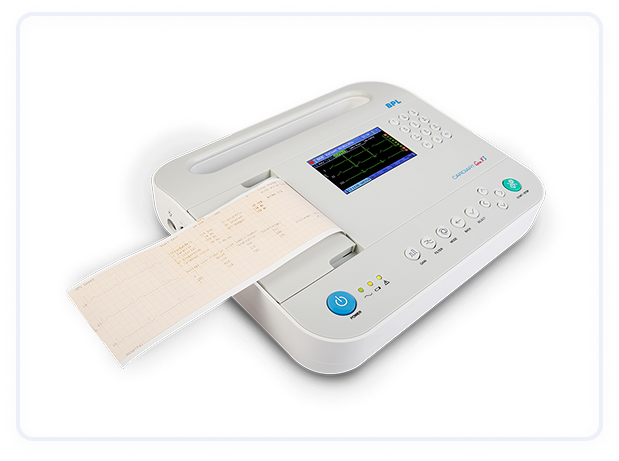
ECG Machine
A defibrillator is a medical device used to deliver an electrical shock to the heart in order to restore a normal heart rhythm in cases of life-threatening cardiac arrhythmias, such as ventricular fibrillation (VF) or pulseless ventricular tachycardia (VT). These arrhythmias can cause the heart to stop pumping blood effectively, leading to cardiac arrest. The shock delivered by a defibrillator can help to reset the heart's electrical system and allow it to resume normal functioning.
Types of Defibrillators
Standard 1/3/6/12-Lead ECG Machine
Portable or Handheld ECG Monitors
Wireless ECG Monitors
Digital ECG Machines
Key Features of ECG Machine
Electrodes : The ECG machine uses electrodes placed on the skin to detect electrical signals from the heart. These electrodes are usually placed on the chest, arms, and legs.
Lead Systems : Commonly, a standard ECG records data from 12 leads, providing a comprehensive view of the heart’s electrical activity from different angles.
Display : ECG machines display the heart's electrical signals as waveforms on a screen or print them on paper. The typical output includes the P wave, QRS complex, and T wave, each representing different phases of the heart's electrical cycle.
Interpretation : Many modern ECG machines come equipped with software that helps analyse the results and can flag potential abnormalities for review by healthcare professionals.
Portability : Some ECG machines are portable, making them suitable for use in emergency settings, clinics, or for home monitoring
Key Features of ECG Machine
Electrodes : The ECG machine uses electrodes placed on the skin to detect electrical signals from the heart. These electrodes are usually placed on the chest, arms, and legs.
Lead Systems : Commonly, a standard ECG records data from 12 leads, providing a comprehensive view of the heart’s electrical activity from different angles.
Display : ECG machines display the heart's electrical signals as waveforms on a screen or print them on paper. The typical output includes the P wave, QRS complex, and T wave, each representing different phases of the heart's electrical cycle.
Interpretation : Many modern ECG machines come equipped with software that helps analyse the results and can flag potential abnormalities for review by healthcare professionals.
Portability : Some ECG machines are portable, making them suitable for use in emergency settings, clinics, or for home monitoring
Various industries
Request More Information
Contact Us to learn more about our offerings or Request a Quote to get started today!
Contact Us

