
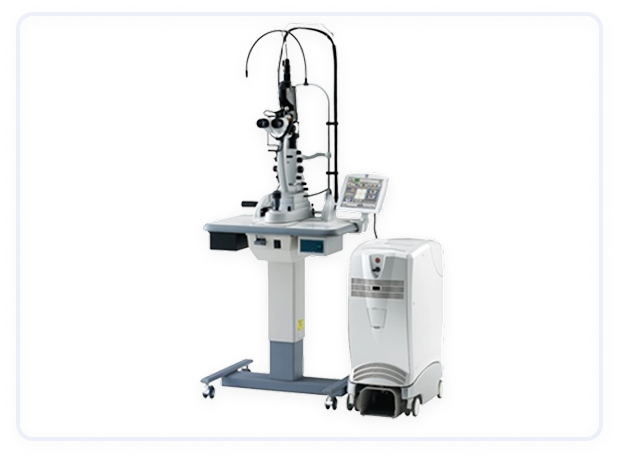
Photocoagulator
A photocoagulator is a medical device used in ophthalmology that employs a focused beam of laser light to treat various eye conditions, primarily those involving the retina and the blood vessels of the eye. The process is known as laser photocoagulation, and it is primarily used to treat retinal diseases and conditions where abnormal blood vessels in the retina need to be sealed or destroyed.
How a Photocoagulator Works
Laser Light:
The photocoagulator uses a laser (often a diode laser or an argon laser) to emit highly concentrated light in the form of a focused beam. The light is directed at specific areas of the retina or other parts of the eye to achieve therapeutic effects.
Controlled Energy:
The laser's energy is delivered in a controlled, precise manner. The beam is adjusted in terms of intensity, duration, and spot size to treat the affected tissue without damaging surrounding healthy tissue.
Photocoagulation Process:
The laser light causes a photochemical reaction in the targeted area of the retina. This reaction generates heat, which coagulates (or seals) the blood vessels. This process helps to prevent or reduce bleeding, swelling, or leakage, and it can also be used to create scar tissue to treat certain retinal conditions.
Focus and Precision:
Photocoagulators can be focused very precisely on a specific area of the retina. Often, the procedure is guided by a fundus camera or OCT (Optical Coherence Tomography) to visualize the treatment area in real-time, ensuring accuracy.
Procedure for Laser Photocoagulation
Preparation:
The patient is positioned comfortably, and their eye is numbed using local anesthetic eye drops. In some cases, dilating eye drops may be used to widen the pupil for better visibility of the retina.
Laser Application:
The ophthalmologist uses the photocoagulator to deliver the laser light. The treatment is typically done in a series of small pulses to the targeted area of the retina.
The laser beam is directed at specific parts of the retina to treat the affected blood vessels or tissue.
Monitoring and Imaging:
The ophthalmologist may use imaging techniques like fundus photography, fluorescein angiography, or OCT to monitor the laser’s effect on the retina during the procedure.
Duration:
The procedure typically takes about 15 to 30 minutes depending on the extent of the treatment needed.
Post-Treatment Care:
After the procedure, the patient may experience temporary blurry vision, which can last for a few hours. Patients are usually asked to avoid strenuous activities for a short time and to use prescribed eye drops as needed.
Regular follow-up appointments are necessary to monitor the effectiveness of the treatment and detect any potential complications.
Procedure for Laser Photocoagulation
Preparation:
The patient is positioned comfortably, and their eye is numbed using local anesthetic eye drops. In some cases, dilating eye drops may be used to widen the pupil for better visibility of the retina.
Laser Application:
The ophthalmologist uses the photocoagulator to deliver the laser light. The treatment is typically done in a series of small pulses to the targeted area of the retina.
The laser beam is directed at specific parts of the retina to treat the affected blood vessels or tissue.
Monitoring and Imaging:
The ophthalmologist may use imaging techniques like fundus photography, fluorescein angiography, or OCT to monitor the laser’s effect on the retina during the procedure.
Duration:
The procedure typically takes about 15 to 30 minutes depending on the extent of the treatment needed.
Post-Treatment Care:
After the procedure, the patient may experience temporary blurry vision, which can last for a few hours. Patients are usually asked to avoid strenuous activities for a short time and to use prescribed eye drops as needed.
Regular follow-up appointments are necessary to monitor the effectiveness of the treatment and detect any potential complications.
Various industries
Request More Information
Contact Us to learn more about our offerings or Request a Quote to get started today!
Contact Us

