
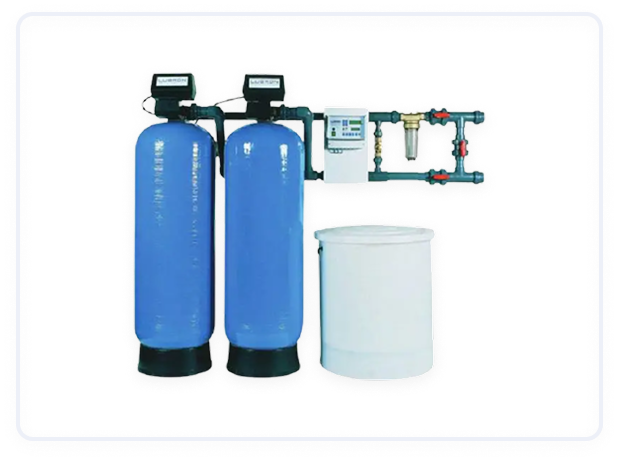
Water Softeners
In the context of CSSD (Central Sterile Services Department), a water softener plays a critical role in ensuring the quality of water used for sterilization processes. Water quality is essential in sterilization procedures because hard water (which contains high levels of calcium, magnesium, and other minerals) can affect the performance of autoclaves, washing machines, and other sterilization equipment.
Benefits of Water Softeners
Enhanced Sterilization Outcomes:
By improving water quality, softeners help achieve more effective cleaning and better sterilization results, which are critical in ensuring patient safety and preventing infections.
Maintenance-Free Equipment:
Water softeners reduce the frequency of service required for sterilization equipment, as hard water can cause mineral damage to autoclaves and washing machines. This reduces downtime and maintenance costs.
Better Instrument Quality:
Instruments sterilized with soft water are free of mineral residues, which can leave marks or deposits on the tools. This ensures that instruments are clean and safe for use.
Cost Savings:
The reduced need for maintenance, detergent, and repair costs makes water softeners a cost-effective investment for the CSSD.
Types of Water Softeners
Salt-Based Ion-Exchange Softeners:
These are the most common type of water softeners and are effective at removing hardness from water. They use sodium chloride (salt) to regenerate the resin and soften the water. These are highly efficient for larger CSSD operations that require a consistent supply of soft water.
Salt-Free Water Softeners:
Instead of using salt, these systems use potassium or other methods to prevent scale buildup. These are generally used in situations where salt-based systems may not be suitable or where environmental considerations are a factor.
Reverse Osmosis (RO) Systems:
While not a traditional water softener, reverse osmosis systems can be used in combination with water softeners in some CSSD settings. RO systems remove most dissolved solids, including calcium and magnesium ions, resulting in very soft or purified water for critical sterilization processes.
Magnetic or Electronic Softeners:
These systems are less common in CSSDs, but they claim to reduce scaling by altering the properties of minerals in the water. These are usually used in conjunction with other softening methods and are considered less effective than ion-exchange systems.
Types of Water Softeners
Salt-Based Ion-Exchange Softeners:
These are the most common type of water softeners and are effective at removing hardness from water. They use sodium chloride (salt) to regenerate the resin and soften the water. These are highly efficient for larger CSSD operations that require a consistent supply of soft water.
Salt-Free Water Softeners:
Instead of using salt, these systems use potassium or other methods to prevent scale buildup. These are generally used in situations where salt-based systems may not be suitable or where environmental considerations are a factor.
Reverse Osmosis (RO) Systems:
While not a traditional water softener, reverse osmosis systems can be used in combination with water softeners in some CSSD settings. RO systems remove most dissolved solids, including calcium and magnesium ions, resulting in very soft or purified water for critical sterilization processes.
Magnetic or Electronic Softeners:
These systems are less common in CSSDs, but they claim to reduce scaling by altering the properties of minerals in the water. These are usually used in conjunction with other softening methods and are considered less effective than ion-exchange systems.
Request More Information
Contact Us to learn more about our offerings or Request a Quote to get started today!
Contact Us

