
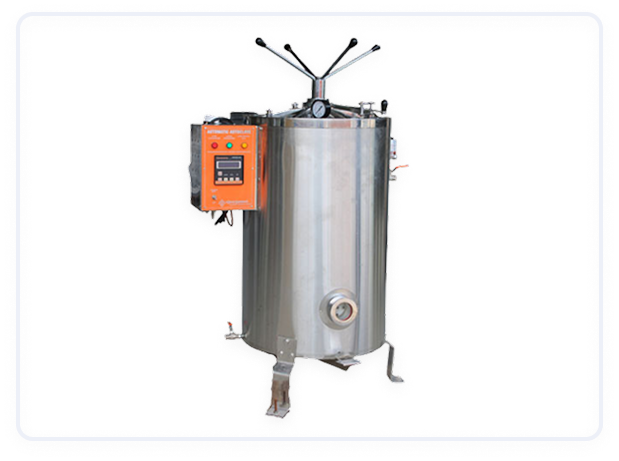
Vertical Autoclave
A Vertical Autoclave is a type of sterilization equipment used primarily in healthcare and laboratory settings for sterilizing medical instruments, surgical tools, glassware, and other items. Unlike horizontal autoclaves, where the door opens horizontally, vertical autoclaves have a door that opens upwards, often resembling a pressure cooker design. These devices use steam sterilization under high pressure and temperature to ensure that the items inside are free from microorganisms such as bacteria, viruses, and fungi, making them safe for reuse.
Key Features of Portable X-Ray Machines
Vertical Design:
Upward-opening door: The vertical autoclave has a top-to-bottom loading door that opens upwards. This is particularly useful for smaller, more compact designs, or for sterilizing smaller quantities of equipment at a time.
Compact size: Vertical autoclaves are often more space-efficient compared to horizontal models. Their design is especially advantageous in smaller medical facilities or laboratories with limited space.
Steam Sterilization:
Vertical autoclaves operate by utilizing saturated steam to sterilize instruments. The items to be sterilized are placed inside the chamber, and steam is introduced at high pressure (typically 121°C to 134°C) to kill any bacteria, viruses, and other pathogens present.
The sterilization process typically takes around 15 to 30 minutes, depending on the material being sterilized and the temperature used.
Sterilization Cycles:
Gravity Displacement: Steam is allowed to naturally enter the chamber, displacing air. This is a common sterilization cycle used for solid items.
Prevacuum Cycle: In this cycle, air is evacuated from the chamber using a vacuum pump before steam is introduced. This method ensures more effective sterilization for hollow instruments or items with complex shapes.
Flash Sterilization: This cycle is used for quick sterilization of instruments that need to be reused immediately. It uses higher temperatures for a shorter period.
Safety Mechanisms:
Vertical autoclaves have built-in automatic locking mechanisms to prevent the door from being opened during the sterilization cycle, ensuring safety for operators.
Pressure relief valves are included to prevent dangerous overpressurization inside the chamber.
Temperature and pressure sensors are integrated into the system to monitor and maintain the desired sterilization conditions.
Control System:
Modern vertical autoclaves often come with microprocessor-based control systems that automatically regulate the sterilization parameters (e.g., temperature, pressure, cycle duration) to ensure a consistent sterilization process.
Some models have digital displays that allow operators to monitor the cycle status and view logs of previous sterilizations for auditing and quality control.
Chamber Size and Capacity:
Vertical autoclaves come in different sizes, from small bench-top models to larger industrial models. However, compared to horizontal autoclaves, vertical models typically have a smaller capacity, making them more suited to smaller loads or compact spaces.
Material Compatibility:
Vertical autoclaves are capable of sterilizing a variety of materials, including metal surgical instruments, plastic goods, glassware, textiles, and liquids, provided they are properly wrapped or placed in suitable containers for safe sterilization.
Various industries
Request More Information
Contact Us to learn more about our offerings or Request a Quote to get started today!
Contact Us

