
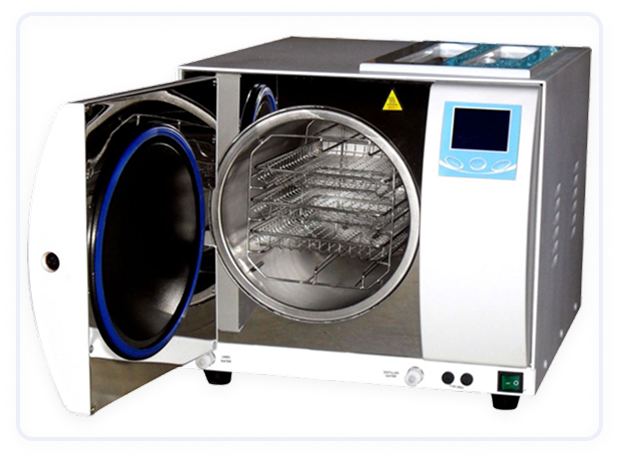
Dental Autoclave
A Dental Autoclave is a specialized sterilization machine used in dental clinics and practices to ensure that dental instruments and equipment are disinfected and free from harmful microorganisms before use. These devices use steam under pressure to sterilize instruments and other materials, effectively killing bacteria, viruses, fungi, and spores that could cause infections. Autoclaving is the most reliable method for sterilizing dental tools, ensuring that they are safe for patient use.
Key Features and Components of a C-Arm Machine
Steam Sterilization:
Dental autoclaves use saturated steam at high pressure (typically 121°C to 134°C) to sterilize dental instruments. The steam penetrates the instruments, raising the temperature inside the autoclave chamber, which destroys microorganisms on the tools.
The process usually takes about 15-30 minutes, depending on the type of load and sterilization cycle selected.
Variety of Cycles:
Gravity Displacement Cycle: This is the most basic sterilization cycle, where steam displaces the air in the autoclave chamber. It is typically used for solid instruments that do not have hollow parts.
Prevacuum Cycle: This cycle uses a vacuum pump to remove air from the chamber before steam is injected. It is used for more complex instruments like handpieces or instruments with hollow parts, ensuring better steam penetration.
Flash Sterilization: This rapid sterilization cycle is used for instruments that need to be sterilized and immediately used. It involves a quicker process at a higher temperature.
Pressure and Temperature Control:
Dental autoclaves are equipped with advanced pressure and temperature controls to ensure the sterilization process is carried out under the right conditions. These are critical for ensuring the effectiveness of sterilization and the safety of the instruments.
Automatic Cycle Control:
Most modern dental autoclaves come with automatic cycle control, where the operator simply selects the appropriate program, and the autoclave takes care of the rest. Many models have microprocessor-based systems that monitor and adjust the sterilization process automatically.
Built-in Safety Features:
Automatic Door Locking: Dental autoclaves feature automatic door locks to prevent opening the door during the sterilization process, protecting users from exposure to high pressure and temperature.
Pressure Relief Valve: This feature ensures that the autoclave can safely release excess pressure if needed.
Drying Cycle:
After the sterilization cycle is complete, many dental autoclaves have a drying cycle to ensure that instruments come out dry and ready for use. This is particularly important for instruments that could rust or corrode if left wet.
User-Friendly Interface:
Most dental autoclaves feature digital displays or touchscreen interfaces, which make it easy to monitor the status of the sterilization cycle, set parameters, and view logs for auditing or maintenance purposes.
Compact Design:
Dental autoclaves are designed to be compact and space-efficient, making them suitable for the relatively small spaces available in most dental practices. They are typically small enough to fit on countertops or be placed in dedicated sterilization areas.
Various industries
Request More Information
Contact Us to learn more about our offerings or Request a Quote to get started today!
Contact Us

