
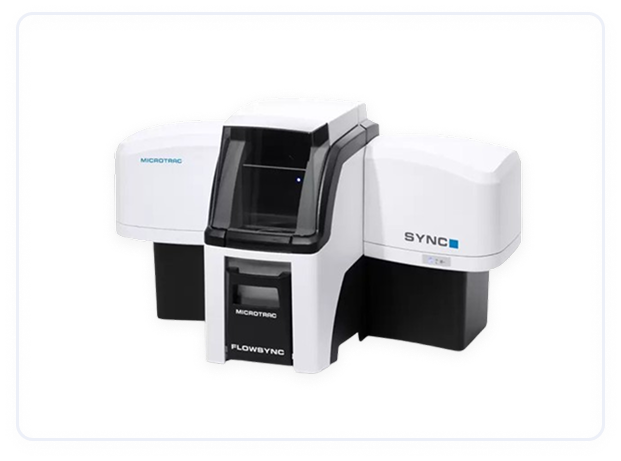
ELEMENTRAC ONH‑p 2
Particle characterization refers to the process of analyzing and quantifying the physical, chemical, and structural properties of particles in various materials. This analysis is crucial in fields such as pharmaceuticals, materials science, food, environmental science, and manufacturing, where the properties of particles—such as size, shape, surface area, distribution, and composition—significantly influence the material's behavior, performance, and quality.
Key Aspects of Particle Characterization:
Particle Size and Size Distribution :
Particle size refers to the dimension of individual particles, which can vary depending on the material and method of preparation.
Particle size distribution (PSD) indicates the variation in particle sizes within a sample. Knowing the distribution is important for understanding the behavior of materials, such as flowability, dissolution rates, or packing density.
Techniques for Measuring Particle Size :
Laser Diffraction : Measures the scattering of laser light by particles to estimate their size and distribution.
Dynamic Light Scattering (DLS) : Measures the Brownian motion of particles in suspension to determine size, typically used for smaller particles (nanometers to microns).
Sieve Analysis : Uses a series of sieves with different mesh sizes to separate particles into size fractions. This is commonly used for larger particles.
Sedimentation : Measures the settling velocity of particles in a fluid to determine their size, often used for fine powders or suspensions.
Particle Shape :
Particle shape plays a key role in determining properties like flowability, compressibility, and packing density.
Irregularly shaped particles often have different behaviors than spherical ones.
Techniques for Measuring Particle Shape :
Scanning Electron Microscopy (SEM) : Provides high-resolution images to visually inspect the shape of individual particles.
Image Analysis : Utilizes software to analyze photographs or microscope images of particles to measure various shape parameters such as circularity, aspect ratio and surface roughness.
Dynamic Imaging : Measures the size and shape of particles as they move through a flow, often used in combination with other techniques like laser diffraction.
Surface Area :
Surface area is a crucial parameter that affects the reactivity, adsorption properties, and dissolution rates of particles, especially for catalysts, powders and pharmaceuticals.
Techniques for Measuring Surface Area :
BET (Brunauer-Emmett-Teller) Method : Based on nitrogen adsorption, this method measures the surface area of fine powders, particularly in porous materials.
Gas Adsorption : Measures the amount of gas (typically nitrogen) adsorbed onto a particle surface to determine surface area and porosity.
Bulk Properties :
Bulk properties like flowability, compressibility, and packability are important for understanding how powders and granular materials behave in industrial processes such as mixing, compression and transportation.
Techniques
Powder Rheometry : Measures the flow properties of powders to understand how they behave under different conditions (e.g., stress, strain).
Bulk Density : Determines the density of a powder or granular material in a loosely packed state.
Compressibility : Measures how much a powder can be compacted under pressure, which is critical for tablet and capsule formation in pharmaceuticals.
Particle Concentration and Dispersion :
Characterizing the concentration and dispersion of particles in a medium is important in applications like coatings, suspensions, and inks.
Techniques
Ultrasonic Dispersion : Helps measure and disperse particles in suspension for uniformity and consistency in liquid systems.
Spectrophotometry : Measures light absorption and scattering to estimate particle concentration in a suspension.
Various industries
Request More Information
Contact Us to learn more about our offerings or Request a Quote to get started today!
Contact Us

