
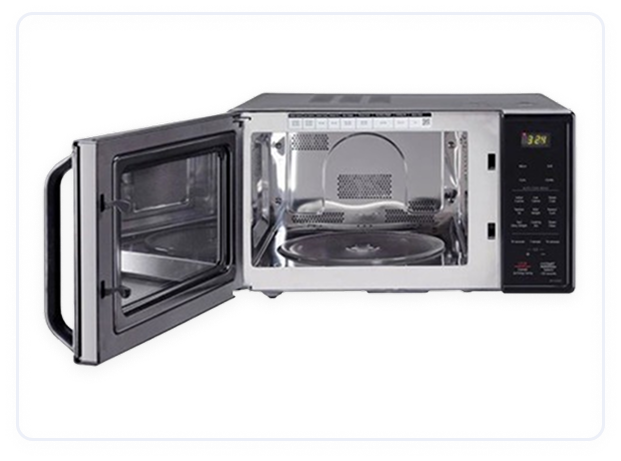
Microwave
microwave is a type of electromagnetic wave with a wavelength ranging from one meter to one millimeter, corresponding to frequencies between 300 MHz (0.3 GHz) and 300 GHz. It is commonly used in various applications, from communications to cooking. Below is an explanation of its key aspects, both in terms of its technology and its use in different industries:
Key Features and Functions :
Microwave Technology : Microwaves, as electromagnetic waves, are a form of radiation that is often used in various technologies due to their unique ability to penetrate materials and their ability to transfer energy.
Frequency Range : Microwaves are typically divided into bands, with the microwave spectrum covering frequencies between 300 MHz and 300 GHz.
Properties :
Penetrating Power : Microwaves can penetrate many materials, such as plastic, glass, and even food, making them useful for heating and communication.
Heat Generation : When microwaves are absorbed by materials, they cause the movement of charged particles, leading to the generation of heat. This is the basis for microwave ovens and certain industrial processes.
Line-of-Sight Communication : Due to their relatively high frequency, microwaves can be used for point-to-point communication, often requiring clear, unobstructed lines of sight between transmitting and receiving equipment.
Microwave Oven (Cooking) : The microwave oven is one of the most common household and commercial appliances that uses microwave technology for cooking and heating food.
How It Works : Microwaves are typically divided into bands, with the microwave spectrum covering frequencies between 300 MHz and 300 GHz.
Microwaves are generated by a device called a magnetron inside the oven.
The generated microwaves are directed into the cooking chamber, where they are absorbed by water molecules and other polar molecules in food.
This causes the molecules to vibrate, producing heat that cooks the food from the inside out.
Advantages of Microwave Cooking :
Speed : Microwaves cook food much faster than conventional ovens because they directly heat the food, rather than heating the air or the surface of the food.
Energy Efficiency : Microwaves use less energy than traditional ovens because they directly heat food, whereas conventional ovens lose energy to the surrounding air.
Convenience : They offer quick, easy cooking for a wide variety of foods, making them ideal for reheating, defrosting, or preparing meals quickly.
Industrial Applications of Microwaves : Microwaves are also widely used in various industries, particularly in processes that require heat generation or communication:
Microwave Heating (Industrial).
Microwave Communication.
Microwave Spectroscopy (Scientific Use) : Microwaves are used in scientific research, particularly in spectroscopy, to analyze molecular structures and dynamics.
Microwave Spectroscopy : This technique involves the interaction of microwave radiation with matter, typically molecules, and is used to study molecular transitions and the behavior of gases and liquids at the atomic level.
Applications in Physics and Chemistry : Microwave spectroscopy provides valuable insights into molecular structures, bonding, and energy states, making it an important tool in research and development across various scientific fields.
Microwave in Medicine : Microwaves have several applications in the medical field, primarily for non-invasive treatments:
Microwave Diathermy : A therapeutic technique where microwaves are used to generate deep heat in tissues, commonly used in physiotherapy to relieve pain, reduce muscle spasms, and promote healing.
Microwave Ablation : A medical procedure used to treat tumors, particularly in the liver, lungs, and kidneys, by using microwave energy to heat and destroy cancerous tissue.
Microwave in Military and Defence : Microwaves are also used in military applications, such as
Directed Energy Weapons : These use high-power microwave energy to damage electronic equipment or disable vehicles and other assets.
Radar and Detection : Microwaves are essential for radar systems that detect objects, measure distances, and provide situational awareness in military operations.
Electronic Warfare : Microwaves are used to disrupt or jam communication systems, radar, and other electronic devices, a form of electronic warfare.
Request More Information
Contact Us to learn more about our offerings or Request a Quote to get started today!
Contact Us

