
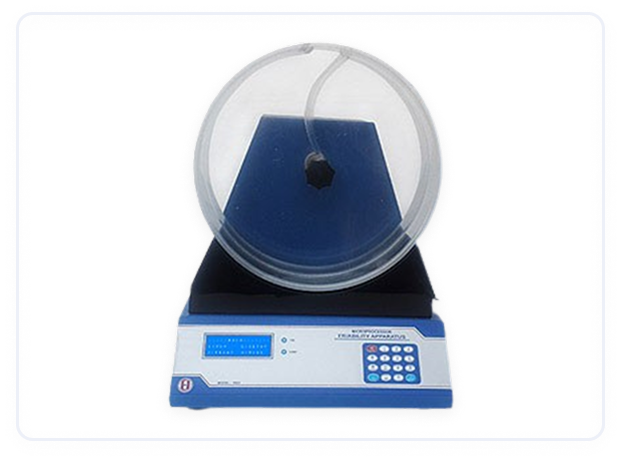
Friability Tester
A Friability Tester is an essential laboratory instrument used in the pharmaceutical, nutraceutical, and other related industries to assess the mechanical strength and durability of tablets, capsules, or other solid dosage forms. The friability test measures the tendency of a tablet or pill to break, chip, or crumble when subjected to mechanical stress during handling, packaging, or transportation. This is crucial for ensuring that tablets will not break prematurely and that they maintain their integrity until they are consumed by the user.
Key Features and Function of a Friability Tester :
Purpose and Function :
Measure Tablet Fragility : The friability tester measures the ability of a tablet to withstand mechanical stress, simulating the conditions it might face during production, packaging, and transportation.
Quality Control : This test helps ensure the tablets meet the required mechanical strength standards and are resistant to breaking or crumbling during handling.
Regulatory Compliance : The friability test is part of the Good Manufacturing Practice (GMP) guidelines for the pharmaceutical industry. It is also required by regulatory agencies like the FDA and USP to ensure that tablets have the appropriate strength for safe and effective use.
How a Friability Tester Works :
The friability tester typically consists of a rotating drum or container that simulates the stress and abrasion that tablets would undergo in a real-world setting.
Rotary Drum : Tablets are placed in a drum or container that rotates at a specified speed, usually 25–30 rpm. The drum rotates for a set period, typically 4–6 minutes.
Abrasion and Impact : During rotation, the tablets are subjected to impacts and abrasions as they rub against one another and the walls of the drum. This mimics the stresses tablets experience during handling, transportation, and packaging.
Weight Measurement : After the test, the tablets are weighed to determine the amount of material lost (e.g., broken or chipped). The percentage of weight loss is calculated, which represents the friability of the tablets.
Testing Procedure :
Weighing Tablets : A specified number of tablets (typically 20 tablets) are weighed accurately before the test.
Placement in Drum : The tablets are placed in the friability tester drum.
Rotation : The drum is rotated at a constant speed, usually 25–30 rpm, for a specified duration (typically 4–6 minutes).
Post-Test Weighing : After the test is completed, the tablets are removed from the drum, and any powder or broken pieces are collected. The tablets are then weighed again.
Calculation : The percentage of friability is calculated using the formula:
Friability(%)=Initial Weight−Final WeightInitial Weight×100\text{Friability}
Types of Friability Testers :
Standard Friability Tester : This type typically consists of a drum that rotates horizontally. It is the most common type used in tablet manufacturing to assess the friability of tablets.
Modified Friability Tester : These are more advanced versions of the standard tester, often equipped with additional features such as digital readouts, automatic weight recording, or data logging capabilities.
Manual Friability Tester : These are more basic and may require manual intervention to stop the rotation and record the results.
Various industries
Request More Information
Contact Us to learn more about our offerings or Request a Quote to get started today!
Contact Us

