
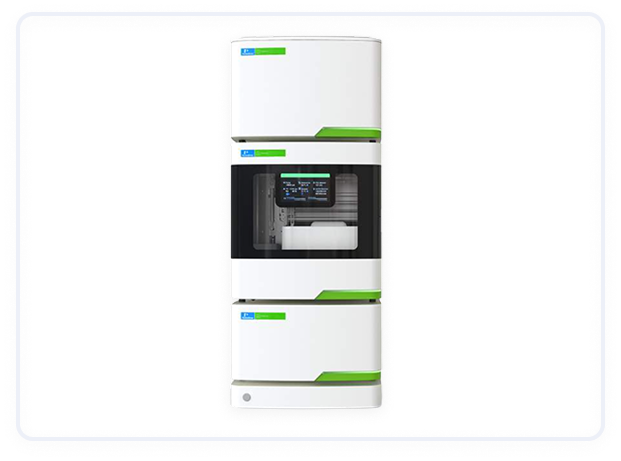
Liquid Chromatography (LC)
Liquid Chromatography (LC) is a widely used analytical technique for separating, identifying, and quantifying components in a mixture. In liquid chromatography, a liquid (mobile phase) is passed through a stationary phase, and the components of the mixture interact differently with the stationary phase, leading to their separation. The method is particularly useful for analyzing compounds that are not easily vaporized or that degrade at high temperatures.
Key Components of Gas Chromatography
Mobile Phase : A liquid solvent or mixture of solvents that moves through the system, carrying the sample with it. The choice of mobile phase depends on the chemical properties of the analysis and the stationary phase.
Stationary Phase : A solid or liquid phase that is packed into a column through which the mobile phase flows. The stationary phase can be made of materials such as silica gel, polymers, or other materials depending on the type of chromatography.
Sample : The mixture of substances to be separated, introduced into the system at the beginning of the column.
Detector : A device at the end of the column that measures the presence and concentration of the separated components. Common detectors include UV-Vis , fluorescence, or mass spectrometers.
Column : A tube that contains the stationary phase, where the separation occurs. Columns come in various sizes and materials, such as packed or capillary columns.
Various industries
Request More Information
Contact Us to learn more about our offerings or Request a Quote to get started today!
Contact Us

